
Here for you
01 Jun 2026Support and information you can trust: behind the scenes with our Health Information team
You might have spotted the ‘trusted information creator’ quality standard on our website, or heard that our health information is reliable and evidence-based. But what does that actually mean? Step into a day in the life of our Health Information team to see how we turn the latest evidence into clear, accessible information – and take a behind-the-scenes look at how we bring your stories to the page and screen.

Most of us turn to the internet when we have a question about our health. And now, search engines use artificial intelligence (AI) to pull together an answer from across the web in seconds.
It can be helpful, but it’s not always accurate – and it doesn’t give you the whole picture. That’s why our trusted health information has never been more important. You’ll only get clear, reliable information if you go direct to the source.

To remain certified as a trusted source of health information, every year we share our processes with the Patient Information Forum (PIF) – an independent membership organisation for people working in the field.
In this 'Day in the Life', you’ll get a behind-the-scenes look at how we update and produce our health information – from booklets to real-life stories.
The morning workflow: Looking after our resources
I kick off the day by checking the stock levels in our warehouse. Making sure the shelves stay topped up is a small but essential part of keeping our information flowing to the right people at the right time.
Throughout the day, I’ll be responding to orders from lots of different people – GPs, community nurses, men living with prostate cancer and volunteers running awareness events, making sure they’ve ordered the most suitable resources for what they need.
Next, I finish up a first draft of updates to one of our fact sheets and get ready to send it out to health professionals for review. This includes consultants (hospital doctors) and clinical nurse specialists. Their feedback is key – making sure the information reflects what patients are likely to experience in real life and flagging any changes in the treatment pathway or diagnostic process.
By late morning, I can get the ball rolling on my next review. Before I start checking over the latest evidence and medical guidelines, I need to know what people think of the current version – so I email our pool of Information Review volunteers. They either have experience of prostate cancer themselves or support someone who does. Their insight is essential, helping us spot what might be missing based on their personal experience and anything that might be confusing or unclear.
Before I break for lunch, I spend an hour helping the team update all our existing information on abiraterone following a recent change in who can have the drug. Staying timely and responsive to treatment changes is crucial, so you have access to the most up-to-date information about your treatment options.
Our volunteers help us in lots of different ways – from helping out at our events to reviewing our health information. If you’re interested in volunteering, you can express your interest on our website.
An afternoon with you: telling real-life stories
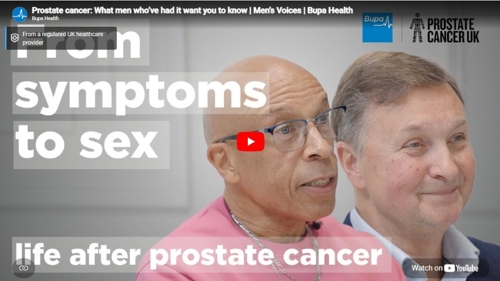
After lunch, I’m due on set – because today we’re filming for an exciting new project with one of our partners, Bupa. To prepare, I’ve developed the scripts by translating the written health information into plain, spoken English – while keeping the wording reassuring and medically accurate.
My role on set is to make sure everything that’s being said on camera is accurate, clear and aligned with our information. I listen closely while the cameras are rolling and flag up anything that needs clarifying or rephrasing.
It’s a really collaborative process, and a good example of how careful preparation can turn complex health information into something that’s clear, supportive and presented in a way that you can trust.
Once filming wraps, I’ve got just enough time to focus on some ongoing work on our real-life stories. These provide a wonderful opportunity for people to share their experience of being diagnosed with prostate cancer, making treatment decisions and dealing with the side effects of treatment.
Recently, I was tasked with finding someone to share their experience of being on active surveillance. I found a volunteer by asking members of our Active surveillance online support group. For the interview, my questions were based on what might be useful for others to know, but I kept things flexible so Justin could share what mattered most to him, in his own words. Read Justin’s active surveillance story on our website.
If you’re interested in sharing your story, keep an eye out for invitations posted to our Online Community and in our other community spaces.

A day in the life of a Specialist Nurse: meet our expert team
Looking for information and support? Wondering where to turn? Our Specialist Nurse Lara Reilly breaks down the critical conversations that are so often a lifeline for men and their loved ones.
Read Article
Taking the first steps when you’ve just been diagnosed
Our Specialist Nurse, Patricia Smith, helps you navigate uncertainty, find the right support, and make choices about your treatment and wellbeing.
Read Article
Understanding your prostate cancer journey: a personal guide
Volunteer Gordon McMurray shares his personal path through diagnosis and treatment – from making sense of daunting medical terms to finding the right support.
Read Article
‘What do I tell my son?’ Talking to your family about prostate cancer
The hardest conversations are often with the people we love most. Volunteer Nick Molyneux explains how he began talking to his son about prostate cancer.
Read Article