
Shifting the needle: how our research funding is moving things forward
Our research funding is moving projects forward — shifting the field closer to real-world impact.
Are we shifting the needle?
Every year, we invest millions into research. A fair question is: are we actually moving things forward?
The short answer is yes — most of the research we fund progresses, and continues to move forward beyond the life of a project.
Instead of just looking at individual projects, we’ve taken a step back to look at the bigger picture — how our research portfolio is progressing over time.
Looking across our research portfolio
In 2026, our analysis includes over 180 projects, representing more than £41 million of investment across research that started between 2007 and 2023.

A simple way to describe progress
We use a simple six-stage framework to track how research moves from early discovery to real-world use — from early ideas through to tests or treatments that can benefit men.

What we track
For each project, we look at where it sits at three points:
in application (when funding is awarded to the project)
at completion (when funding has completed)
and post-completion (what happens after the project ends)
That last one is really important — we know progress doesn’t stop when a project ends.
What we're seeing so far
The picture is encouraging.
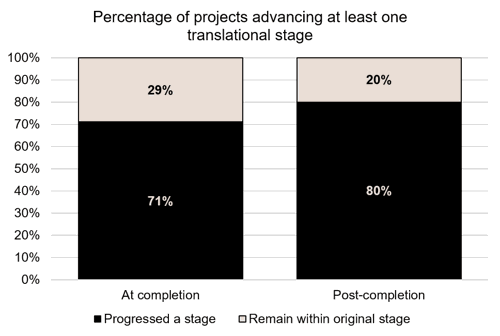
Almost three quarters of projects progress by at least one stage by the time they finish
That rises to around four fifths when we include what happens after the project ends.
So we’re not just funding research — we’re helping it move forward, and that momentum continues beyond the funding period.
How far do projects move?
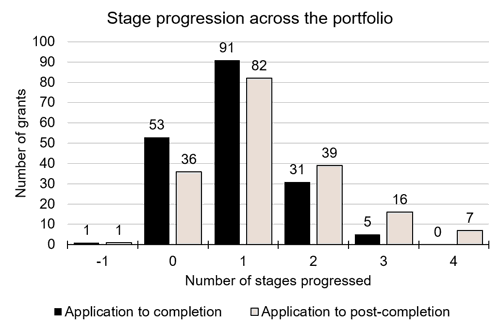
Most projects move forward by one stage — which is what you’d expect.
But some go much further, progressing through multiple stages over time, especially when we look beyond the end of the grant.
The bigger picture
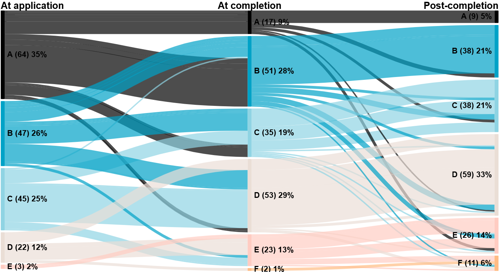
When you look across the portfolio as a whole, you can see a clear shift:
fewer projects in the earliest stages
more moving into testing and clinical development
and continued growth in later-stage work
It’s a really simple way of showing that our funding is helping shift research along the pathway — closer to something that can benefit men.
Why this matters
Behind each step is progress towards earlier diagnosis, better treatments and improved care for men.
This kind of view helps us make better decisions about what we fund and how we support it.
It also gives us a clear way to show how research is moving forward — and how our supporters are helping bring better tests, treatments and care closer to men who need them.
