
Prostate cancer and your sex life
Page summary
Prostate cancer treatment can cause side effects that affect your sex life. These can include your desire for sex (libido), your ability to have erections, and how you orgasm or ejaculate.
Some men will have temporary erection problems. Others will be able to get an erection with the help of treatment. Some won’t be able to get an erection, even with medical help.
There are many types of treatments for erectile problems including tablets, injections, vacuum pumps and testosterone replacement therapy.
You are not alone - there's a lot of support available for you and your partner including counsellors, sex therapy, our support services and support groups.
Prostate cancer and its treatment can affect your sex life, and how you feel about yourself and your relationship. On this page, we describe the sexual side effects you may experience and the treatment and support that's available.
Whether you're single or in a relationship, and whatever your sexuality, we hope you'll find this helpful. If you're the partner of a man with prostate cancer you may also find it useful.
Support from our Specialist Nurses
Our Specialist Nurses offer a sexual support service. This is a chance for you, or your partner, to talk to one of our Specialist Nurses trained in sexual problems after treatment for prostate cancer. They can talk to you about the impact of treatment on your sex life and relationships, and discuss possible treatments or ways to deal with these changes.
How might prostate cancer affect my sex life?
Prostate cancer and its treatment can affect your sex life in overlapping ways:
Mind – Finding out you have cancer can make you feel down or anxious, changing your feelings about sex.
Body – Some treatments can damage the nerves and blood supply needed for erections. Hormone therapy can affect your desire for sex (libido).
Relationships – Coping with cancer can change your close relationships or your thoughts about starting a new relationship .
Sex is an important part of life for many of us. Dealing with prostate cancer and living with the side effects of treatment can have an impact on your sex life. Many men with prostate cancer say these changes are some of the biggest challenges of living with prostate cancer. But there’s lots of treatment options and support available. If you’re in a relationship, the sexual impact of prostate cancer could affect both you and your partner. So it’s important that you both get support if you want it
There’s no right or wrong way to deal with changes to your sex life. Some men will want to try treatments for erection problems, while others will prefer to find other ways of being close to their partner. What’s important is to find what’s right for you.
What makes you feel sexual and desire?
Feeling sexual is partly physical, and partly about your thoughts and feelings. It depends on how well your sex organs are working, and whether other parts of the body are helping them work – such as the blood supply, nerves, brain and hormones. The way your body responds sexually also depends on your thoughts and feelings – about yourself and others.
Will I be able to have sex and masturbate after prostate cancer treatment?
Many men wonder if they’ll be able to get an erection and have sex after their treatment. This will depend on several things, including:
what type of treatment you’ve had
how you’re feeling
whether you already had sexual problems before you started treatment.
Everyone is different. Some men will have temporary erection problems. Others will be able to get an erection with the help of treatment. Some won’t be able to get an erection, even with medical help.
Some worries about sex and prostate cancer explained
You can't pass on cancer through sex.
Having sex won't affect how well your treatment works.
Having sex has no effect on your cancer or the chance of it coming back after treatment.
It's safe to have an erection if you have a catheter in.
What sexual side effects can prostate cancer treatments have?
Different treatments for prostate cancer will have different effects on your sex life. You may notice changes in:
how you feel about yourself sexually
your desire for sex
your ability to get an erection
your ability to ejaculate and have an orgasm
your ability to have children (fertility)
how your body looks
your relationships.
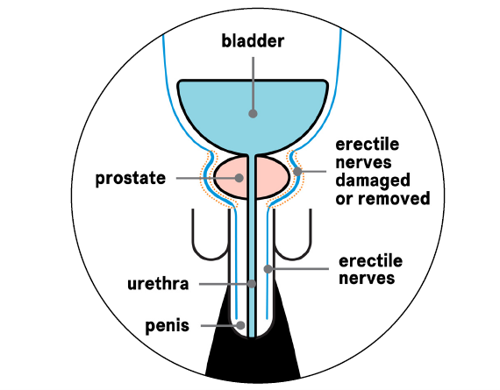
Surgery (radical prostatectomy) is an operation to remove the prostate and seminal vesicles (glands that produce some of the fluid in semen).
During the operation, the erectile nerves that surround the prostate may be removed or damaged (see diagram below). This often causes problems getting or keeping an erection (erectile dysfunction).
When can I have sex or masturbate after surgery?
It’s safe to have erections and masturbate when you feel like it – but if you have a catheter, it could feel uncomfortable, so you may want to wait until it's removed.
After keyhole or robot-assisted surgery, you can have sex or be sexually active once your catheter is removed.
After open surgery, wait until the wound has healed and it feels comfortable before you try having sex.
If you receive anal sex, wait about six weeks to give the area time to heal.
What sexual problems might I have after surgery?
Surgery often causes erection problems. Many men find these problems improve with time and treatment, but it can take a few months to a few years. But your erections may not be as strong as before and not all men get their erections back.
Your penis might change size and shape slightly (for example, curving or narrowing)
You won’t ejaculate any semen but can still orgasm, although it may feel different. For some men, orgasms feel better than before. For others, it may not feel as good.
You won’t be able to have a child naturally.
You may leak urine (wee) during sex or arousal.
You may feel some pain when you orgasm.
You may lose your desire for sex.
External beam radiotherapy involves radiation being directed at the prostate from outside the body to destroy prostate cancer cells.
When can I have sex or masturbate after external beam radiotherapy?
You can try having sex or masturbating as soon as you feel like it.
You may want to use contraception during treatment and for up to a year afterwards if there’s a chance of your partner becoming pregnant, or if they are pregnant.
If you receive anal sex, wait at least two months until any bowel problems or sensitivity in this area have passed.
What sexual problems might I have after external beam radiotherapy?
Erection problems can develop slowly after you’ve had this treatment.
You may find ejaculation uncomfortable.
You may produce less or no semen.
You can still orgasm but it may feel different.
You may not be able to have a child naturally.
Permanent seed brachytherapy (also called low-dose brachytherapy) is a type of radiotherapy where tiny radioactive seeds are put inside the prostate to destroy cancer cells and stay in the prostate permanently.
When can I have sex or masturbate after permanent seed brachytherapy?
After treatment, wait a few days before you try having sex or masturbating.
It’s rare for the seeds to come out in your semen, but it’s best to use a condom the first five times you ejaculate. Double wrap used condoms and put them in the bin.
Use contraception during treatment and for up to a year afterwards if there is a chance of your partner becoming pregnant. Speak to your doctor about this.
If you receive anal sex, there’s a risk your partner’s penis might be exposed to some radiation in the first few months. Your doctor may suggest you avoid anal sex or anal play for six months. Speak to your doctor about this.
Wait a few months before using sex toys that stimulate the prostate, such as a vibrator. This is because the seeds might move or come, but after a few months they should be fixed in position.
What sexual problems might I have after permanent seed brachytherapy?
Erection problems can develop slowly over time.
You can still orgasm but may produce less or no semen.
You may notice a little blood in your semen for the few months after treatment. This isn’t usually a problem but tell your doctor or nurse if there’s a lot of bleeding.
Ejaculation may feel different and sometimes painful, especially soon after the seeds have been inserted.
You might not be able to have a child naturally.
High dose-rate brachytherapy is a type of radiotherapy where thin tubes are put into your prostate. A source of radiation is passed down the tubes for a few minutes to destroy the cancer cells, then the tubes are removed.
When can I have sex or masturbate after high dose-rate brachytherapy?
After treatment, wait at least one week before you try having sex or masturbating.
Use contraception for a while after treatment if there’s a chance of your partner becoming pregnant. Speak to your doctor about how long you need to do this for.
If you receive anal sex and have bowel problems after treatment, wait two months or until these have improved before trying anal play or anal sex.
What sexual problems might I have after high dose-rate brachytherapy?
You may have erection problems that slowly get worse over several years.
You may produce less or no semen, but can still orgasm.
You may notice a little blood in your semen for a few months. This isn’t usually a problem, but tell your doctor or nurse if there’s a lot of bleeding.
You may not be able to have a child naturally.
High-intensity focused ultrasound (HIFU) uses high-frequency ultrasound energy to heat and destroy cancer cells.
When can I have sex or masturbate after HIFU?
After HIFU, wait at least one to two weeks before you try having sex or masturbating.
What sexual problems might I have after HIFU?
You may have erection problems.
You may produce less or no semen but can still orgasm.
You may not be able to have a child naturally.
Cryotherapy uses extreme cold to freeze and destroy cancer cells.
When can I have sex or masturbate after cryotherapy?
After cryotherapy, wait at least one week before you try having sex or masturbating.
What sexual problems might I have after cryotherapy?
You may have erection problems.
You may not be able to have a child naturally.
Hormone therapy stops the hormone testosterone from reaching cancer cells. This stops the cancer cells from growing. It can be given by injection, implants, tablets or surgery.
When can I have sex or masturbate on or after hormone therapy?
It’s safe to have sex or masturbate if you’re having injections, implants or tablets.
If you’ve had surgery to remove your testicles (orchidectomy), wait until the wound has healed and it feels comfortable before you try having sex.
What sexual problems might I have after hormone therapy?
You may have erection problems and you'll likely lose your desire for sex.
Your penis may become shorter and your testicles smaller due to lower testosterone levels in your body.
You may not be able to orgasm or you may have less intense orgasms. You may produce less semen.
You may experience changes to your body that affect how you feel about sex, such as weight gain or hot flushes.
Chemotherapy uses anti-cancer drugs to kill cancer cells, wherever they are in the body.
When can I have sex or masturbate after chemotherapy?
Unless your doctor tells you otherwise, it’s safe to have sex or masturbate as soon as you feel like it.
Use contraception during treatment and for up to four months afterwards. Ask your doctor about this.
What sexual problems might I have after chemotherapy?
You may not be able to have a child naturally.
You can still orgasm but it may feel different.
You may experience changes to your body that can affect how you feel about sex, such as hair loss, feeling tired or feeling unwell.
How do I get the right treatment and support for sexual problems?
Your healthcare team is there to help support you in these changes to your sex life and finding a treatment that works for you. Everyone is different, and how you choose to deal with these changes is up to you. It’s important to do what’s right for you.
How do I get treatment for erection problems?
Your healthcare team can prescribe treatments for erection problems for free on the NHS, whether you want an erection for sex or masturbation. There may be a limit on how much they can prescribe, but there's no age limit. You can also be referred to a specialist in sexual problems or an ED (erectile dysfunction) clinic.
It can take time and commitment before you see results from a treatment. Follow the advice you’re given about how to use your treatment and for how long. Try each treatment several times and if it still doesn’t work, tell your doctor or nurse. They can review your treatment or refer you to a specialist.
How do I talk about sex with healthcare professionals?
It can be difficult talking about sex, many men avoid asking for help or trying treatments. But it’s okay to talk about sex and ask for support.
Talking your doctor, nurse or other health professional can help you get the right treatment and support and may make you feel more positive and in control. There are also trained professionals who have experience in helping people with sexual problems. They will make you feel more comfortable and can also help you deal with any changes in your relationships.
You can ask about sexual problems at any stage of your prostate cancer journey - before, during or after your prostate cancer treatment. Talking about sex before your treatment means you’ll know what to expect, and it’ll give you a chance to prepare to start treatment for sexual problems soon after your treatment.
Your team should ask about your erections and sex life when you have prostate cancer treatment. But if they don't, you may need to bring it up yourself.
Be prepared to try again
Not everyone is used to talking about sex, even your health professional might not be used to talking about it. Don’t be put off. You might need to bring it up more than once, or with a different person in your team. You can also ask to be referred to an expert in sexual problems or an ED clinic – they will be used to talking about sexual problems.
Erection problems
Difficulty getting or keeping an erection is sometimes called erectile dysfunction (ED) or impotence and is a side effect of some prostate cancer treatments such as surgery. Usually when you're sexually aroused (turned on), your brain sends signals to the nerves in your penis. The nerves then cause blood to flow into your penis, making it hard. However, anything that interferes with your nerves, blood supply, testosterone level or desire for sex can make it difficult to get or keep an erection.
What are the causes of erection problems?
Sexual problems before treatment
Many men with prostate cancer may have had sexual problems before their treatment. It’s normal for our sex lives to slow down as we get older, and problems with erections become more common. But that doesn’t mean there’s nothing you can do about them.
Treatment for prostate cancer
Some treatments for prostate cancer can damage the nerves and blood vessels that are needed for an erection, including surgery, external beam radiotherapy, permanent seed and high dose-rate brachytherapy, HIFU and cryotherapy. Hormone therapy can lower your desire for sex, cause problems getting or keeping an erection, and the long-term lack of sexual activity means your penis will stop working so well.
Other health problems
Other health problems can cause erection problems, including:
high blood pressure
diabetes
heart disease
high cholesterol
neurological conditions, such as epilepsy, stroke, multiple sclerosis or Parkinson’s disease
other prostate problems, such as an enlarged prostate or prostatitis, and their treatments
hormone problems, such as low testosterone.
Other medicines
Some medicines can also cause erection problems including, medicines for high blood pressure, high cholesterol, depression and anxiety, ulcers, irregular heartbeat, epilepsy and an enlarged prostate. Don’t stop taking any medications you’re on, but talk to your doctor or nurse about whether they could be affecting your ability to get an erection.
Depression and anxiety
Feeling low or anxious can affect your erections and your desire to have sex.
Lifestyle
Smoking, drinking too much alcohol, lack of exercise and being overweight can cause problems with erections.
What are the treatments for erection problems?
There are a number of treatments available which work in different ways. Treatments include:
You can find out more about each of the treatments for erection problems here.
Your desire for sex
Prostate cancer can affect your desire for sex through treatments that reduce it, as well as the impact that diagnosis and treatment can have on the way you feel and your self-confidence. If you have a partner, let them know if you’re feeling less interested in sex and why. It’s likely they’ll notice the change and could be feeling rejected.
What might affect my sex drive?
Hormone therapy is likely to lower your sex drive because it lowers your level of testosterone, which is what gives you your sex drive.
If you’re on life-long hormone therapy, you could ask your doctor or nurse about intermittent hormone therapy. This is where you stop hormone therapy when your PSA level is low and steady, and start it again if it starts to rise.
Your sex drive may improve while you’re not having hormone therapy. But this isn’t suitable for everyone. It can also take several months to have an effect, and some men don’t notice any improvement.
If having sex is important to you, some treatments for erection problems might work even if your sex drive is low.
Some men with prostate cancer feel that they have lost their self-esteem, self-confidence or sense of masculinity.
Feeling down or stressed can lower your interest in sex. If you feel like this, consider getting some support. Feeling better about yourself may improve your sex life.
All treatments for prostate cancer can cause tiredness or fatigue (extreme tiredness) during or after treatment. This can also make you lose interest in sex or feel like you don’t have enough energy for it.
Try to plan your day around when you have more energy. Having sex in a position where you don’t have to move around much and taking breaks may also help.
Being physically close, such as hugging and holding each other, can help you stay close to your partner when you don’t feel like having sex.
Other side effects of prostate cancer treatment, such as urinary and bowel problems, can affect your sex life. If you’re on hormone therapy, changes to your body may make you feel embarrassed and less interested in sex.
Tell your partner about any side effects you’re struggling with and talk to your doctor or nurse about ways to manage them.
Changes in penis size and shape
After surgery (radical prostatectomy), some men notice their penis is a little shorter, or that it has a curve or narrower area. We’re not sure why this happens, but it could be due to low oxygen levels in the penis caused by not having erections. Other treatments, such as hormone therapy with radiotherapy, may also cause changes in the size of your penis.
Encouraging blood flow to the penis after surgery may help prevent this. For example, using a vacuum pump, either on its own or with PDE5 inhibitor tablets, could help maintain its size and improve your erections.
Changes to orgasm and ejaculation
After prostate cancer treatment, you'll still have feeling in your penis. You should still be able to have an orgasm, but it may feel different from before.
If you’ve had surgery (radical prostatectomy), you won’t be able to ejaculate when you orgasm. This is because the prostate and seminal vesicles, which make some of the fluid in semen, are both removed. Instead, you may have a dry orgasm.
A dry orgasm is where you feel the sensation of orgasm but don’t ejaculate. You might release a small amount of liquid from the tip of your penis when you orgasm. This might be fluid from glands lining the urethra (the tube you urinate through).
If you’ve had radiotherapy, permanent seed brachytherapy, high dose-rate brachytherapy, high intensity focused ultrasound (HIFU) or hormone therapy, you may produce less or no semen during and after treatment.
With radiotherapy, HIFU and brachytherapy, you may also notice a small amount of blood in your semen. Although this can be worrying it isn’t usually a problem. But tell your doctor or nurse if this happens. Some men on hormone therapy say their orgasms feel less intense.
What can be the emotional impact of ejaculation changes be?
It can be hard to manage ejaculation changes, not only physically but emotionally too. For some men, it can change how they feel about themselves and their sexual identity. It can also affect your relationship and confidence in intimacy with a partner.
It’s important to remember you're not alone in how you feel and not to bury these feelings. Talking with your partner about how these changes have affected you can help you to feel more open and closer to them. This can help you to redefine what intimacy and sex means to you after treatment.
You may also find it helpful to use our Sexual support service run by our Specialist Nurses. You and your partner can talk about changes to your ejaculation and chat through what could help.
If you’ve had radiotherapy or an operation called a transurethral resection of the prostate (TURP) to help you urinate more easily, you may get something called retrograde ejaculation. This is where semen travels backwards into your bladder when you orgasm, rather than out through your penis.
The semen is passed out of the body when you next urinate. It isn’t harmful and shouldn’t affect your enjoyment of sex, but it may feel different to the orgasms you’re used to. Retrograde ejaculation can also be a side effect of some alpha blockers, such as tamsulosin.
Some men find they don’t last as long during sex and reach orgasm sooner than they want to. This can sometimes happen if you’re not relaxed or worried that you may lose your erection.
If this happens, wearing a condom or changing positions during sex might help. Or you could try stopping when you feel like you’re getting close to orgasm, and starting again a few moments later.
After treatment, you might leak a small amount of urine when you’re sexually aroused, such as when hugging or kissing. It can also happen when you orgasm. This is called climacturia.
Although it could be a shock at first, urine is germ-free and safe. If it bothers you, you could try:
urinating before you have sex
wearing a condom
having sex in the shower
having sex on a towel, or keeping towels or tissues nearby.
Top tip
Before sex, make sure your bladder and urethra are empty by taking the following steps:
After you urinate, use your fingertips to press gently upwards at the base of your scrotum.
Keep pressing gently as you move your fingers forward from the base of your penis to the tip.
This should squeeze out any urine left in your urethra.
If leaking urine is still bothering you, your doctor or nurse can give you further advice. Some men also find that pelvic floor muscle exercises help.
After treatment, some men feel pain in their penis when they orgasm, or find ejaculation uncomfortable. This may happen every time or just sometimes, and can last less than a minute or longer.
Let your doctor or nurse know about the pain, especially if it doesn’t get better. You may have some scarring or a blockage in your urethra that needs treatment.
Having children after prostate cancer treatment
After prostate cancer treatment, you might not be able to have children naturally:
If you have surgery (radical prostatectomy), you won’t ejaculate any semen.
If you have radiotherapy, permanent seed brachytherapy or high dose-rate brachytherapy, the radiation might affect your ability to produce sperm, although this can be temporary. Or you may produce less fluid when you ejaculate. This means you may still be fertile, but it may take longer or be more difficult to have children naturally.
Storing sperm
Whatever prostate cancer treatment you have, you may want to think about storing your sperm before your treatment so that you can use it for fertility treatment later. Ask your doctor or nurse whether sperm storage is available locally. Sperm can usually be stored for up to 10 years, and sometimes longer.
Using contraception
Changes to your sperm during radiotherapy, permanent seed brachytherapy, high dose-rate brachytherapy or chemotherapy could affect any children you conceive during or after treatment. But the risk is very low and it hasn’t been proven.
Use a condom or another form of contraception during your treatment, and for a while afterwards, to avoid your partner getting pregnant. This could be for up to a year, but speak to your doctor or nurse about this.
If you and your partner are planning to have children, speak to your doctor. You can get information on fertility and possible treatments from Macmillan Cancer Support and Fertility Network UK.
How can sexual problems affect my thoughts and feelings?
Sex or masturbation may be an important part of your life as an individual and in your relationship. It may be a way of having fun or relaxing, helping you cope with difficult times, or boosting your self-esteem and happiness. Changes to your sex life can have a big impact on your thoughts and feelings and your identity.
You might feel unsatisfied, worried or even angry. Some men say they feel like they’ve lost a part of themselves, and feel a sense of sadness and loss. Partners might also struggle with these feelings.
But there are many ways to tackle these issues, and it’s possible to find solutions that work for you.
Feeling down or worried
If you have prostate cancer, it’s not unusual to feel down or worried. You may need to deal with these feelings before you can deal with any sexual issues. Visit our Wellbeing hub, to find out more about how prostate cancer can affect your wellbeing.
If you're finding it difficult to cope, you may find it helpful to speak to your nurse or GP, or to a counsellor or therapist. You can also get support from our Specialist Nurses.
Your identity
Changes to your body and erection problems after prostate cancer treatment can change how you feel about yourself, and affect your self-esteem. Some men say they feel old and unmanly, or that they have lost a part of their identity.
If your sex life is important to you, then these changes might be harder to deal with too. We explain some things that could help below.
What things can I do to help?
Looking after yourself and being in control of finding the right support and information, can help you manage the sexual side effects of prostate cancer treatment.
Try to go easy on yourself
Are you putting too much pressure on yourself? It can take time to come to terms with being diagnosed with prostate cancer, having treatment and living with side effects – particularly sexual ones.
Getting some advice or support as soon as possible may stop difficult feelings becoming too much.
Look after yourself and your body
These are some things that might lift your mood if you’re struggling with difficult feelings.
Focus on the things you like about yourself.
Do activities or hobbies you’re good at and enjoy, or try something new.
Do some physical activity – this can also give you more energy and keep your body in shape, which may also improve your sex life.
Make healthy changes to your diet, including cutting down on alcohol – this can also help you lose weight and keep healthy.
Where can I find support?
If you’re stressed or down about changes to your sex life, finding some support may improve how you feel. Some men prefer to cope on their own, but getting things off your chest can help. There are lots of different ways to get support, including talking to a counsellor, going to a local support group, or contacting our Specialist Nurses.
You're not alone. A lot of men, with and without prostate cancer, have sexual problems. Talking to others who’ve had similar experiences can be useful.
Trained counsellors
Counsellors are trained to listen and can help you find your own ways to deal with things. Many hospitals have counsellors or psychologists who specialise in helping people with cancer. Ask your doctor or nurse at the hospital if this is available. Or you may be referred to a psychosexual therapist who is trained to listen and talk about issues relating to sex and relationships.
You can also refer yourself for counselling on the NHS, or you could see a private counsellor or psychosexual therapist. To find out more, visit www.nhs.uk/counselling or contact the British Association for Counselling & Psychotherapy.
Local support groups
People affected by prostate cancer get together to share their experiences of living with it. You can ask questions, share worries and know that someone understands what you’re going through. Some groups have been set up by local health professionals, others by men themselves. Many also welcome partners, friends and relatives. To find support groups near you, visit www.tackleprostate.org/supportgroups
Prostate Cancer UK services
Our Specialist Nurses can help answer your questions and support you to deal with sexual side effects, and anything else related to your prostate cancer. They’ve got time to listen, in confidence, to any concerns you or those close to you have.
Our sexual support service is a chance for you, or your partner, to talk to one of our Specialist Nurses trained in sexual problems after treatment for prostate cancer. They can talk to you about the impact of treatment on your sex life and relationships, and discuss possible treatments or ways to deal with these changes.
Our one-to-one peer support service is a chance to speak to someone who’s been there – about erection problems, treatments, or how prostate cancer has affected your relationships and sex life.
Visit our Wellbeing Hub to find information on the mental and emotional impact of a prostate cancer diagnosis and its treatments. You’ll find information on how to manage stress and anxiety, and where to get support.
Our online community is a place to talk about whatever's on your mind – your questions, your ups and your downs. Anyone can ask a question or share an experience.
The specialist nurses were always there and supported us at times of need - their help was reassuring and invaluable
British Association for Counselling & Psychotherapy
Telephone: 01455 883 300
Information about counselling and details of therapists in your area.
College of Sexual and Relationship Therapists
Telephone: 020 8106 9635
Information about sexual and relationship therapy, and details of therapists who meet national standards.
Fertility Network UK
Telephone: 01424 732 361
Information and support for people with fertility problems.
Institute of Psychosexual Medicine
Information about psychosexual medicine, and details of specialists who are trained in the treatment of sexual problems.
LGBTQ+ Walnut
A group for gay and bisexual men, men who have sex with men, trans women, and their partners.
Macmillan Cancer Support
Telephone: 0808 808 0000
Practical, financial and emotional support for people with cancer, their family and friends. Includes information on sex and relationships.
Mind
Telephone: 0300 123 3393
Information and support for mental health issues such as depression or anxiety.
NHS websites
England: www.nhs.uk
Scotland: www.nhsinform.scot
Wales: 111.wales.nhs.uk
nidirect (Northern Ireland)
www.nidirect.gov.uk/health-and-wellbeing
Out with Prostate Cancer
www.outwithprostatecancer.org.uk
Offers a safe and confidential environment to discuss concerns and experiences with other gay and bisexual men with prostate cancer.
Relate
Information, advice and relationship counselling and sex therapy in England, Wales and Northern Ireland.
Relationships Scotland
www.relationships-scotland.org.uk
Telephone: 0345 119 2020
Information, relationship counselling and sex therapy in Scotland.
Samaritans
Telephone: 116 123
Confidential, judgement-free emotional support, 24 hours a day, by telephone, email, letter or face to face.
Switchboard - LGBT+ helpline
Telephone: 0300 330 0630
Free and confidential support and information for lesbian, gay, bisexual and trans people, including a telephone and online chat service.
Questions to ask your doctor or nurse
How could my prostate cancer treatment affect my sex life?
How soon after treatment can I masturbate or have sex?
Which treatments for erection problems would be best for me? Can I get them on the NHS?
Is there anything I can do before I start my prostate cancer treatment to help reduce the sexual side effects?
What happens if the treatment doesn't help with my sexual problems or erection? Are there others I could try?
What other support is available to me?
Can my partner also get support?
References and reviewers
Updated: March 2026 | Due for Review: March 2029
Agochukwu NQ, Wittmann D, Boileau NR, Dunn RL, Montie JE, Kim T, et al. Validity of the Patient-Reported Outcome Measurement Information System (PROMIS) Sexual Interest and Satisfaction Measures in Men Following Radical Prostatectomy. J Clin Oncol Off J Am Soc Clin Oncol. 2019;37:2017–27. PubMed PMID: 31232671; PubMed Central PMCID: PMC7351343
Avellino G, Theva D, Oates RD. Common urologic diseases in older men and their treatment: how they impact fertility. Fertil Steril. 2017;107:305–11.
Barnas JL, Pierpaoli S, Ladd P, Valenzuela R, Aviv N, Parker M, et al. The prevalence and nature of orgasmic dysfunction after radical prostatectomy. BJU Int. 2004;94:603–5. PubMed PMID: 15329121.
Bock M, Burns RT, Pereira TA, Bernie HL. A contemporary review of the treatments and challenges associated with penile rehabilitation after radical prostatectomy including a proposed optimal approach. Int J Impot Res. 2024;36:480–5.
Boeri L, Capogrosso P, Ventimiglia E, Cazzaniga W, Pederzoli F, Gandaglia G, et al. Depressive Symptoms and Low Sexual Desire after Radical Prostatectomy: Early and Long-Term Outcomes in a Real-Life Setting. J Urol. 2018;199:474–80.
Botrel TEA, Clark O, dos Reis RB, Pompeo ACL, Ferreira U, Sadi MV, et al. Intermittent versus continuous androgen deprivation for locally advanced, recurrent or metastatic prostate cancer: a systematic review and meta-analysis. BMC Urol. 2014;14:9. PubMed PMID: 24460605; PubMed Central PMCID: PMC3913526.
Bowie J, Brunckhorst O, Stewart R, Dasgupta P, Ahmed K. Body image, self-esteem, and sense of masculinity in patients with prostate cancer: a qualitative meta-synthesis. J Cancer Surviv. 2022;16:95–110. PubMed PMID: 33963973; PubMed Central PMCID: PMC8881246.
Bowie J, Brunckhorst O, Stewart R, Dasgupta P, Ahmed K. Body image, self-esteem, and sense of masculinity in patients with prostate cancer: a qualitative meta-synthesis. J Cancer Surviv Res Pract. 2022;16:95–110. PubMed PMID: 33963973; PubMed Central PMCID: PMC8881246.
Bownes P, Coles I, Doggart A, Kehoe T. UK Guidance on Radiation Protection Issues following Permanent Iodine- 125 Seed Prostate Brachytherapy [Internet]. 2012. Available from: https://www.ipem.ac.uk/ScientificJournalsPublications/UKGuidanceonRadiationProtectionIssuesfollowi.aspx
Canada AL, Neese LE, Sui D, Schover LR. Pilot intervention to enhance sexual rehabilitation for couples after treatment for localized prostate carcinoma. Cancer. 2005;104:2689–700.
Capogrosso P, Ventimiglia E, Cazzaniga W, Montorsi F, Salonia A. Orgasmic Dysfunction after Radical Prostatectomy. World J Mens Health. 2017;35:1.
Chin YF, Lynn N. Systematic Review of Focal and Salvage Cryotherapy for Prostate Cancer. Cureus. 2022 [cited 2025 Feb 18]. Available from: https://www.cureus.com/articles/82704-systematic-review-of-focal-and-salvage-cryotherapy-for-prostate-cancer
Clavell-Hernandez J, Wang R. Penile rehabilitation following prostate cancer treatment: review of current literature. Asian J Androl. 2015;17:916.
Cornford P, Tilki D, van der Bergh RCN, Eberli D, De Meerleer G, De Santis M, et al. EAU - EANM - ESTRO - ESUR - ISUP - SIOG Guidelines on Prostate Cancer. European Association of Urology; 2025.
DeLamater J, Karraker A. Sexual functioning in older adults. Curr Psychiatry Rep. 2009;11:6–11. PubMed PMID: 19187702.
Donovan JL, Hamdy FC, Lane JA, Young GJ, Metcalfe C, Walsh EI, et al. Patient-Reported Outcomes 12 Years after Localized Prostate Cancer Treatment. NEJM Evid. 2023;2:EVIDoa2300018.
Donovan KA, Walker LM, Wassersug RJ, Thompson LMA, Robinson JW. Psychological effects of androgen-deprivation therapy on men with prostate cancer and their partners: Psychological Effects of ADT. Cancer. 2015;121:4286–99.
Electronic Medicines Compendium. Cabazitaxel 20 mg/ml concentrate for solution for infusion - Summary of Product Characteristics (SmPC) - (emc) | 14575 [Internet]. [cited 2025 Oct 28]. Available from: https://www.medicines.org.uk/emc/product/14575/smpc
Electronic Medicines Compendium. Docetaxel 20 mg/ml concentrate for solution for infusion - Summary of Product Characteristics (SmPC) - (emc) | 7206 [Internet]. [cited 2025 Jul 28]. Available from: https://www.medicines.org.uk/emc/product/7206/smpc#gref
Elliott S, Latini DM, Walker LM, Wassersug R, Robinson JW. Androgen Deprivation Therapy for Prostate Cancer: Recommendations to Improve Patient and Partner Quality of Life: Improving Life on ADT. J Sex Med. 2010;7:2996–3010.
Emanu JC, Avildsen IK, Nelson CJ. Erectile dysfunction after radical prostatectomy: prevalence, medical treatments, and psychosocial interventions. Curr Opin Support Palliat Care. 2016;10:102–7.
Farhood B, Mortezaee K, Haghi‐Aminjan H, Khanlarkhani N, Salehi E, Nashtaei MS, et al. A systematic review of radiation‐induced testicular toxicities following radiotherapy for prostate cancer. J Cell Physiol. 2019;234:14828–37.
Green TP, Saavedra-Belaunde J, Wang R. Ejaculatory and Orgasmic Dysfunction Following Prostate Cancer Therapy: Clinical Management. Med Sci. 2019;7:109.
Guang ZLP, Kristensen G, Røder A, Brasso K. Oncological and Functional Outcomes of Whole-Gland HIFU as the Primary Treatment for Localized Prostate Cancer: A Systematic Review. Clin Genitourin Cancer. 2024;22:102101.
Holloway V, Wylie K. Sex drive and sexual desire. Curr Opin Psychiatry. 2015;28:424–9.
Human Fertilisation & Embryology Authority (HFEA). Human Fertilisation & Embryology Authority (HFEA) [Internet]. [cited 2025 Aug 6]. Sperm freezing. Available from: https://www.hfea.gov.uk/treatments/fertility-preservation/sperm-freezing/
Ilie CP, Mischianu DL, Pemberton RJ. Painful ejaculation. BJU Int. 2007;99:1335–9. PubMed PMID: 17346279.
International Commission on Radiological Protection. Radiation safety aspects of brachytherapy for prostate cancer using permanently implanted sources. A report of ICRP Publication 98. Ann ICRP. 2005;35:iii–vi, 3–50. PubMed PMID: 16330284.
Letts C, Tamlyn K, Byers ES. Exploring the Impact of Prostate Cancer on Men’s Sexual Well-Being. J Psychosoc Oncol. 2010;28:490–510.
Levinson AW, Lavery HJ, Ward NT, Su LM, Pavlovich CP. Is a return to baseline sexual function possible? An analysis of sexual function outcomes following laparoscopic radical prostatectomy. World J Urol. 2010;29:29–34.
Luo YH, Yang YW, Wu CF, Wang C, Li WJ, Zhang HC. Fatigue prevalence in men treated for prostate cancer: A systematic review and meta-analysis. World J Clin Cases. 2021;9:5932–42.
Magnan S, Zarychanski R, Pilote L, Bernier L, Shemilt M, Vigneault E, et al. Intermittent vs Continuous Androgen Deprivation Therapy for Prostate Cancer: A Systematic Review and Meta-analysis. JAMA Oncol. 2015;1–10. PubMed PMID: 26378418.
Mainwaring JM, Walker LM, Robinson JW, Wassersug RJ, Wibowo E. The Psychosocial Consequences of Prostate Cancer Treatments on Body Image, Sexuality, and Relationships. Front Psychol. 2021 [cited 2025 Jun 20];12. Available from: https://www.frontiersin.org/journals/psychology/articles/10.3389/fpsyg.2021.765315/full
McCabe M, Althof SE, Assalian P, Chevret-Measson M, Leiblum SR, Simonelli C, et al. Psychological and Interpersonal Dimensions of Sexual Function and Dysfunction. J Sex Med. 2010;7:327–36.
National Institute for Health and Care Excellence. Prostate cancer: diagnosis and management. NICE Guideline 131 [Internet]. 2021. Available from: https://www.nice.org.uk/guidance/ng131/resources/prostate-cancer-diagnosis-and-management-pdf-66141714312133
National Institute for Health and Care Excellence. Risk factors | Background information | Erectile dysfunction | CKS | NICE [Internet]. 2025 [cited 2025 Oct 6]. Available from: https://cks.nice.org.uk/topics/erectile-dysfunction/background-information/risk-factors/
National Institute for Health and Clinical Excellence. Focal therapy using high-intensity focused ultrasound for localised prostate cancer (Interventional procedures guidance) [Internet]. 2023. Available from: https://www.nice.org.uk/guidance/ipg756/resources/focal-therapy-using-highintensity-focused-ultrasound-for-localised-prostate-cancer-pdf-1899876344182981
Nguyen C, Lairson DR, Swartz MD, Du XL. Risks of Major Long-Term Side Effects Associated with Androgen-Deprivation Therapy in Men with Prostate Cancer. Pharmacother J Hum Pharmacol Drug Ther. 2018;38:999–1009.
Nguyen PL, Alibhai SMH, Basaria S, D’Amico AV, Kantoff PW, Keating NL, et al. Adverse Effects of Androgen Deprivation Therapy and Strategies to Mitigate Them. Eur Urol. 2015;67:825–36.
NHS. nhs.uk [Internet]. 2022 [cited 2025 Oct 29]. Low sex drive (loss of libido). Available from: https://www.nhs.uk/symptoms/loss-of-libido/
Nolsøe AB, Jensen CFS, Østergren PB, Fode M. Neglected side effects to curative prostate cancer treatments. Int J Impot Res. 2021;33:428–38.
Park KK, Lee SH, Chung BH. The Effects of Long‐Term Androgen Deprivation Therapy on Penile Length in Patients with Prostate Cancer: A Single‐Center, Prospective, Open‐Label, Observational Study. J Sex Med. 2011;8:3214–9.
Peters M, van Son M, Moerland M, Kerkmeijer L, Eppinga W, Meijer R, et al. MRI-Guided Ultrafocal HDR Brachytherapy.pdf. Int J Radiat Oncol Biol Phys. 2019;104:1045–53.
Ralph S. Developing UK Guidance on How Long Men Should Abstain from Receiving Anal Sex before, During and after Interventions for Prostate Cancer. Clin Oncol. 2021;33:807–10.
Ridout A, Emberton M, Moore C. Sexual dysfunction and prostate cancer therapy. In: Minhas S, Mulhall J, editors. Male Sexual Dysfunction [Internet]. Chichester, UK: John Wiley & Sons, Ltd; 2016 [cited 2020 Jan 23]. p. 302–13. Available from: http://doi.wiley.com/10.1002/9781118746509.ch3z
Royal College of Physicians of London, Royal College of Radiologists (Great Britain), Royal College of Obstetricians and Gynaecologists (Great Britain). The effects of cancer treatment on reproductive functions: guidance on management : report of a working party. Royal College of Physicians; 2007.
Royal College of Radiologists. Quality assurance practice guidelines for transperineal LDR permanent seed brachytherapy of prostate cancer. 2012.
Saitz TR, Serefoglu EC, Trost LW, Thomas R, Hellstrom WJG. The pre-treatment prevalence and types of sexual dysfunction among patients diagnosed with prostate cancer. Andrology. 2013;1:859–63. PubMed PMID: 24127273.
Salonia A et al. EAU Guidelines on Sexual and Reproductive Health - Uroweb [Internet]. 2025 [cited 2025 Jun 23]. Available from: https://uroweb.org/guidelines/sexual-and-reproductive-health
Schartau P, Nazareth I, Muneer A, Kirby M. Erectile dysfunction. InnovAiT Educ Inspir Gen Pract. 2018;11:269–76.
Shivananda MJ, Rao TSS. Sexual dysfunction in medical practice: Curr Opin Psychiatry. 2016;29:331–5.
Steentjes L, Siesling S, Drummond FJ, van Manen JG, Sharp L, Gavin A. Factors associated with current and severe physical side-effects after prostate cancer treatment: What men report. Eur J Cancer Care (Engl). 2018;27:e12589.
Strouthos I, Tselis N, Chatzikonstantinou G, Butt S, Baltas D, Bon D, et al. High dose rate brachytherapy as monotherapy for localised prostate cancer. Radiother Oncol. 2018;126:270–7.
Tran S, Boissier R, Perrin J, Karsenty G, Lechevallier E. Review of the Different Treatments and Management for Prostate Cancer and Fertility. Urology. 2015;86:936–41.
Visscher J, Hiwase M, Bonevski B, O’Callaghan M. The association of smoking with urinary and sexual function recovery following radical prostatectomy for localized prostate cancer: a systematic review and meta-analysis. Prostate Cancer Prostatic Dis. 2023 [cited 2024 Feb 26]. Available from: https://www.nature.com/articles/s41391-023-00701-2
Voznesensky M, Annam K, Kreder KJ. Understanding and Managing Erectile Dysfunction in Patients Treated for Cancer. J Oncol Pract. 2016;12:297–304.
Wassersug RJ. Maintaining intimacy for prostate cancer patients on androgen deprivation therapy: Curr Opin Support Palliat Care. 2016;10:55–65.
White ID, Wilson J, Aslet P, Baxter AB, Birtle A, Challacombe B, et al. Development of UK guidance on the management of erectile dysfunction resulting from radical radiotherapy and androgen deprivation therapy for prostate cancer. Int J Clin Pract. 2015;69:106–23. PubMed PMID: 25283500; PubMed Central PMCID: PMC4309408.
Wittmann D, Northouse L, Foley S, Gilbert S, Wood DP, Balon R, et al. The psychosocial aspects of sexual recovery after prostate cancer treatment. Int J Impot Res. 2009;21:99–106. PubMed PMID: 19158798.
Wu S, Li K, Zhang Y, Wang L, Zhu B, Wang W. Men’s symptom experience throughout androgen deprivation therapy for prostate cancer: A systematic review and meta-aggregation. Int J Nurs Stud. 2024;157:104796.
- Vanessa Basketter, Urology Lead Nurse, University Hospital Southampton
- Lorraine Grover, Psychosexual Nurse Specialist, The London Clinic, London, and The Shelburne Hospital, Buckinghamshire
- Nicola Lancaster, Macmillan Metastatic Prostate Cancer Clinical Nurse Specialist, Darent Valley Hospital
- Our Specialist Nurses
- Our volunteers.
