

How do changes to this gene contribute to aggressive prostate cancer?

Grant information
Reference: TLD-CAF25-011
Researcher: Dr Shaun Scaramuzza
Institution: The University of Manchester
Award: £346,464
What you need to know
This project looks at a gene called ATM, which, when faulty, can make prostate cancer grow faster and become harder to treat.
Dr Scaramuzza will edit the DNA of cancers grown in the lab to understand why this happens, including when changes to ATM are combined with other genetic changes.
He will also test different drug combinations to find better treatment options for men whose cancer has changes in the ATM gene.
About Dr Shaun Scaramuzza
Dr Scaramuzza completed his master’s degree in biological sciences at the University of Liverpool, specialising in biochemistry, before going on to earn his PhD at the University of Birmingham. His PhD focused on how cells deal with stress while copying their DNA – a process that, when it goes wrong, can drive cancer development.
Since finishing his PhD in 2022, Dr Scaramuzza has expanded this expertise across several research roles. He worked as a Research Associate and Research Fellow at Birmingham, where he continued to develop cutting‑edge tools to study DNA replication. In 2023, he joined the Translational Oncogenomics team at the Manchester Cancer Research Centre and Cancer Research UK Manchester Institute as a Postdoctoral Scientist, where he now focuses on understanding why some prostate cancers become aggressive or resistant to treatment. This grant will help him to expand further on this work as an independent researcher.
Why are we funding this research?
Every man’s prostate cancer is different. Some cancers grow slowly and can be kept under control for years. Others spread quickly and stop responding to treatment. This research focuses on one of the key reasons why that may happen: a faulty gene called ATM. When this gene doesn’t work properly, prostate cancer often becomes more aggressive, harder to treat, and more likely to come back after standard therapies.
Right now, doctors can test for ATM faults, but they don’t fully understand why they make the cancer behave differently. That means men with these gene changes aren’t always spotted early enough, and the treatments they’re offered often don’t work well. This project aims to change that.
Support from Prostate Cancer UK through this Career Acceleration Fellowship is enabling me to establish my independent research career, focused on understanding why inherited DNA repair gene mutations lead to aggressive prostate cancer. This research aims to improve early detection and treatment for men at highest risk, ultimately improving outcomes and quality of life for those affected.
What will Dr Scaramuzza do?
To understand why these prostate cancers become aggressive and difficult to treat, Dr Scaramuzza will build a detailed picture of how these cancers develop, change, and eventually stop responding to treatment.
He’s already used prostate samples donated by men both with and without ATM faults to grow models of prostate cancer in the lab. These models behave much more like real prostate cancers than the older cells researchers have relied on for years. Using them, he’ll watch how healthy‑looking cells begin to go off‑track, and how ATM faults push them towards becoming fast‑growing, unstable tumours.
A major part of the work will involve studying another gene, Cyclin D1, which seems to give cancer cells an extra push when ATM is faulty. Dr Scaramuzza will watch how these genes interact, especially as the cancer grows and starts copying its DNA in a rushed, error‑prone way. He’ll use new technologies that let him zoom right in on how mistakes happen inside these cells, helping him pinpoint exactly what’s driving the cancer’s aggression.
He’ll then test a range of existing cancer drugs, including hormone‑blocking treatments already used for prostate cancer. The goal is to understand why ATM‑faulty cancers become resistant so quickly, and whether combinations of drugs might work better than the ones currently offered.
Finally, Dr Scaramuzza will compare everything he discovers in the lab with genetic data from thousands of men who’ve taken part in major prostate cancer studies. That will help him check that what he’s seeing in the lab reflects what happens in real life.
As part of this project, Dr Scaramuzza will work closely with specialists at The University of Manchester and University College London to strengthen and guide his research. At Manchester, he’ll team up with Professor David Wedge’s group, to learn advanced ways of analysing how cancers evolve. At UCL, he’ll collaborate with Professor Gerhardt Attard, gaining access to thousands of real tumour samples from the STAMPEDE trial. These partnerships will help ensure his work is relevant for men with aggressive prostate cancer.
How will this benefit men?
This research could make a real difference for men whose prostate cancer has a faulty ATM gene. By creating accurate lab models and studying how these aggressive cancers develop, Dr Scaramuzza aims to uncover the key weaknesses that these tumours rely on. This could lead to new ways of spotting which men are at high risk much earlier, as well as smarter, more personalised treatments that are better matched to their cancer’s behaviour.
In the long run, this work could help men live longer, with treatments that work better and fail less often, giving them more time and a better quality of life.
Measuring the impact of this project
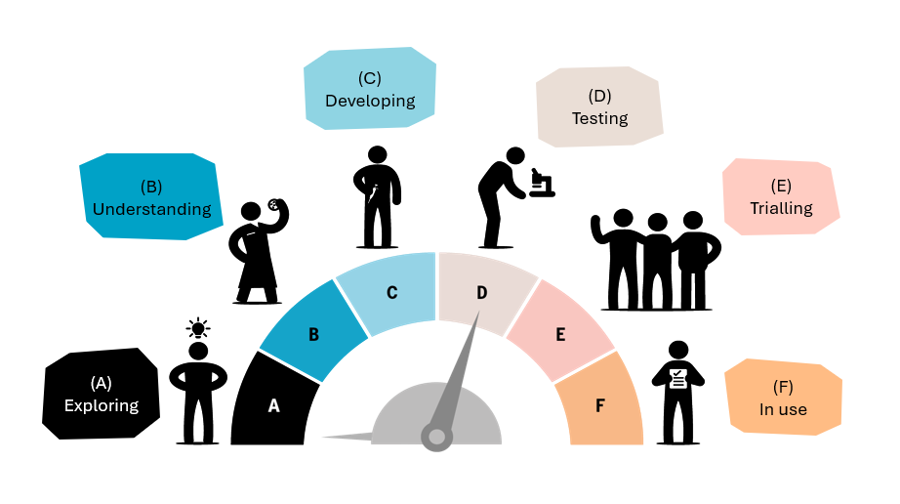
We use a simple six-stage framework to track how research moves from early discovery to real-world use - from early ideas to tests and treatments that can benefit men.
Dr Scaramuzza will start his project by trying to find out new information about how ATM faults drive prostate cancer. This places the starting point of his work at stage A, the exploring stage.
Testing drugs in laboratory models of prostate cancer is a big part of this project, which if successful would push this work all the way to stage D, the testing stage.
Help us fund more research like this
Your donation helps us fund lifesaving research that's improving the way we treat prostate cancer.
You may also be interested in...


Using genetic data to predict progression and reduce recurrence
This project will use genetic data and artificial intelligence (AI) to predict which men are most at risk of their disease progressing or recurring.
Learn More
Using AI to improve the way we diagnose and treat prostate cancer (VANGUARD PATH study)
This study will explore how artificial intelligence (AI) can improve prostate cancer diagnosis by helping doctors better understand how aggressive a man's cancer is and how it might behave over time.
Learn More