
Bisphosphonates for advanced prostate cancer
This page has information about bisphosphonates, which can be used to treat bone problems or prevent further bone damage if your cancer has spread to the bones (advanced prostate cancer).
We explain how bisphosphonates work, what treatment involves, and the advantages and disadvantages of having bisphosphonates for advanced prostate cancer. We also describe the possible side effects of bisphosphonates and ways to manage these.
If you've been diagnosed with localised prostate cancer that hasn't spread outside the prostate, read our information on treatments for localised prostate cancer instead.
What are bisphosphonates?
Bisphosphonates are a type of drug that can help to strengthen bones that have become weak or thin. This may be caused by cancer that has spread (advanced prostate cancer), but can also happen if you’re having hormone therapy. This is because the treatment can change the structure of bones and make them very weak – a condition called osteoporosis.
Bisphosphonates can be given either as tablets or through a drip into a vein in the arm.
Who can have bisphosphonates?
You may be offered bisphosphonates for a number of reasons.
To treat or prevent bone thinning (osteoporosis) caused by hormone therapy
Some types of hormone therapy can make your bones weaker and cause a condition called osteoporosis. This can increase your risk of broken bones (fractures) and be painful. If you have bone thinning, or are at a high risk of it, you may be offered bisphosphonates to take alongside your hormone therapy. Bisphosphonates can strengthen bones and prevent bone thinning. Find out more about bone thinning and hormone therapy.
To treat or prevent bone weakness and damage caused by prostate cancer that has spread to the bones
If prostate cancer spreads to the bones, the cancer can damage them and cause bone pain or broken bones. Bisphosphonates can strengthen the bones and slow down further bone damage. This can help to prevent broken bones and reduce the need for radiotherapy – a treatment used to reduce pain when cancer has spread to the bones.
To help bone pain
Bisphosphonates are sometimes used alongside pain killers to help relieve and prevent bone pain caused by prostate cancer that has spread.
To treat hypercalcaemia
Bisphosphonates can also be used to treat a condition called hypercalcaemia, which is a high level of calcium in the blood. It's rare, but can sometimes affect men with advanced prostate cancer.
What else might affect whether I can have bisphosphonates?
If you’ve had problems with your kidneys, teeth or jaw in the past, you may not be able to have bisphosphonates. This is because, very rarely, bisphosphonates can cause jaw bone problems (osteonecrosis of the jaw). Talk to your doctor or nurse about whether bisphosphonates are suitable for you.
What are the other treament options?
Other treatments that can be used to support the bones include:
Surgery to support damaged bone
A metal pin or plate can be inserted into the affected bone to strengthen and support the bone and reduce the risk of it breaking. This can make the bone stronger and less painful. Or, a type of cement can be used to fill the damaged area, but this is not commonly used.
A drug called denosumab (Xgeva®)
This can help manage bone thinning. It might be an option if bisphosophonates aren't suitable for you and you live in England or Wales. If you live in Scotland or Northern Ireland, your specialist doctor may be able to apply to your local NHS or Health and Social Care (HSC) trust if they think denosumab is suitable for you. This is called an individual funding request.
Other treatments for pain include pain-relieving drugs, pain-relieving radiotherapy, radium-223 (Xofigo®).
If you have hypercalaemia, other treatments for this inlcude passing fluid through a drip in your arm, to flush calcium out of your blood.
How do bisphosphonates work?
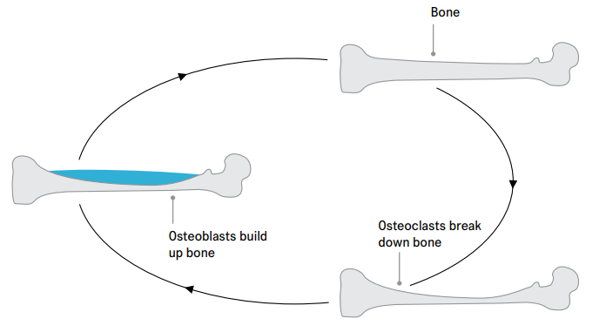
Your bones are made of living tissue and are constantly changing. In healthy bones, cells are always breaking down and rebuilding bone tissue – this is called the bone cycle. There are two types of bone cells that do this job:
osteoclasts – cells that break down old bone tissue
osteoblasts – cells that make new bone tissue.
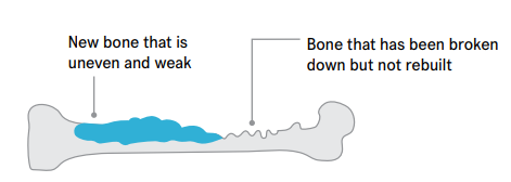
In strong and healthy bones, old bone tissue is broken down at the same rate that new bone tissue is made. But if prostate cancer spreads to the bone, this carefully balanced cycle can change. Two things can happen.
Bone tissue gets broken down faster than it gets made, so too much bone tissue is destroyed. This can make the bones thinner and weaker. It often happens naturally as men get older and in men who drink lots of alcohol or smoke.
Bone tissue gets made faster than it gets broken down, so too much bone tissue is made. This is common in men with advanced prostate cancer. When it happens, the bone becomes thicker because of the extra bone tissue. But it is weaker than bone that is made normally, because it doesn’t have chance to become hard or strong.
Both processes can happen at the same time in different areas of the bone. The damage they cause makes the bones weaker, which can increase the risk of broken bones and cause bone pain.
Bisphosphonates can help prevent the breakdown of bone by osteoclasts. They can also help to encourage bone building by osteoblasts. This makes the bone stronger and reduces the risk of broken bones. This might also help to relieve pain, although the evidence for this isn’t very strong.
The bone cycle
This is what happens in normal healthy bone.
Bone damaged by cancer
This is what happens when cancer spreads to the bone.
What are the advantages and disadvantages of bisphosphonates?
As with all drugs, there are advantages and disadvantages of using bisphosphonates. What might be important to one person might not be so important to someone else. If you’re offered bisphosphonates, talk to your doctor or nurse about your own situation – they can help you decide if bisphosphonates are right for you.
What are the advantages?
Bisphosphonates can make your bones stronger. This may help to reduce your risk of broken bones and other bone problems, such as bone pain.
Bisphosphonates can delay the need for other treatments for bone problems such as radiotherapy to relieve bone pain or surgery to support damaged bones.
Bisphosphonates can help to relieve bone pain and stop it getting worse – you may find it easier to move around if you have less bone pain.
You should still be able to carry on with your normal day-to-day activities, such as driving, while having bisphosphonates.
Bisphosphonates can lower the amount of calcium in your blood if it’s high (hypercalcaemia), and treat the symptoms.
What are the disadvantages?
Bisphosphonates can cause side effects.
If you’re having a bisphosphonate called zoledronic acid (Zometa®) to treat osteoporosis, you may have regular hospital appointments for treatment. But, if you are having a bisphosphonate to prevent osteoporosis, this may be once a year.
Zoledronic acid is given through a drip (intravenous infusion) into a vein, which can be uncomfortable but shouldn’t be painful.
If you’re given bisphosphonate tablets, you’ll need to be very careful that you take them correctly.
If you’re taking bisphosphonates to help with bone pain, they can take up to two to three months to start helping.
You may need regular dental check-ups, which some people dislike. And, you will need to pay for these check-ups and any dental treatment.
You may need regular blood tests to check the levels of certain minteral, and to check your kidneys are working properly.
What does treatment involve?
Before treatment
Before your first treatment, you will have some tests to check your kidneys are working properly. This is because bisphosphonates may affect how well they work. The kidneys get rid of any waste products in your blood, so it’s important to make sure they’re working properly before you begin treatment. You'll also have a blood test to check the levels of certain minerals, such as calcium and phosphate, in your blood. If your levels are low, you may need to take supplements.
You may also have some scans to check where the cancer has spread to. These may include a bone scan, an MRI (magnetic resonance imaging) scan, a PET (positron emission tomography) scan, or a CT (computerised tomography) scan.
If you’re on hormone therapy, you may also have a different type of scan to check whether any areas of bone tissue have become weak from osteoporosis. You may hear this called a DEXA (dual energy X-ray absorptiometry) scan or a bone density scan. Your doctor or nurse will be able to give you more information about these.
Your doctor may work out your risk of bone fractures using an online tool known as QFracture® or FRAX®. These tools can help your doctor decide what types of bisphosphonate treatment would be available for you.
You may need to visit a dentist before you start treatment. This is because bisphosphonates can occasionally cause jaw problems, but this is rare. If you need dental treatment, you may not be able to have bisphosphonates until this has finished. Speak to your doctor or nurse about any health or dental problems you’ve had in the past. Let them know about any medicines you are taking.
During treatment
Bisphosphonates may be given as tablets (oral bisphosphonates) or through a drip into a vein in the arm (intravenous bisphosphonates).
Remember that each hospital and doctor will do things slightly differently. Your doctor will tell you which type of bisphosphonate is most suitable for you and how often you will have treatment.
The most common bisphosphonate tablets for men with osteoporosis are alendronic acid (Fosamax®) and risedronate sodium (Actonel®). It’s important to read the instructions carefully and do the following things when taking bisphosphonate tablets.
Take the tablet at the start of the day, at least 30 minutes before you eat, drink or take any other medicines or supplements. If you need to take other tablets around the same time in the day as your bisphosphonate tablet, talk to your pharmacist as they will help advise on how to time the doses.
Take the tablet with a full glass of water (at least 200ml). This must be plain tap water – mineral water, or water with anything added to it, can interfere with the medicine.
Swallow the tablet whole – don’t suck, crush or chew it.
Stand up or sit upright in a chair for 30 minutes after taking the tablet to help make sure the tablet is swallowed properly – don’t lie down.
Don’t eat for at least 30 minutes after taking the tablet.
Alendronic acid and risedronate sodium are taken once a week. If you forget to take the tablet on the usual day, take it on the first morning after you remember. Then return to taking the tablets on your usual day. Do not take more than one tablet a day.
Ask your doctor or nurse if you’re not sure when to take your tablets.
Most men don't have problems with disphosphonate tablets, but if you do , you might be offered bisphosphonates by drip instead.
The most common bisphosphonate given to men with advanced prostate cancer is called zoledronic acid (Zometa®). It is given through a drip into a vein in the arm.
Make sure you drink plenty of water before each treatment – this can help lower your risk of getting kidney problems. Talk to your doctor or nurse about how much water to drink before each treatment.
The needle in your arm may feel uncomfortable during the treatment, but it shouldn’t hurt. Each treatment session takes about 15 minutes. You might feel dizzy or get flu-like symptoms for around 24 hours after your treatment. Ask your doctor or nurse about ways to manage this – they may suggest taking a mild pain-relieving drug, such as paracetamol. It may also be a good idea to take a friend or family member with you in case you need help getting home afterwards.
How often you have treatment may vary. This depends on why you taking bisphosphonates.
If you’re having bisphosphonates to strengthen your bones and prevent broken bones, you may have treatment every 3, 4 or 12 weeks.
If you’re having bisphosphonates for osteoporosis, you may have your treatment every 6 or 12 months.
If you’re also having chemotherapy to treat your prostate cancer, you might be given your bisphosphonate treatment at your chemotherapy appointments. If you miss a treatment, it’s usually fine to continue at your next appointment. This shouldn’t cause you any problems.
How long will I need bisphosphonates?
This will depend on your own situation, and on whether you’re having bisphosphonates for osteoporosis, bone pain or hypercalcaemia.
If you're having bisphosphonates to prevent bone thinning, you will usually be on them for a fixed length of time, usually two to five years. If you’re having bisphosphonates to treat prostate cancer that has spread to the bones, you’ll usually have them for as long as they’re working. Your doctor will probably review your treatment about every two years, or more regularly at your routine appointments, to check it’s working well and not causing you any problems.
If you’re having bisphosphonates to treat hypercalcaemia, you’ll usually stop treatment once your calcium levels are back to normal.
Some bisphosphonates can cause the levels of minerals in your blood, such as calcium, magnesium and phosphate, to become low. These are minerals that the body uses to make new bone. So you’ll have regular blood tests to check you have enough of these minerals. If your levels are low, you may need to take supplements. Some doctors might offer you calcium and vitamin D supplements as soon as you start having bisphosphonates. Your doctor or nurse can tell you more about this.
What are the side effects of bisphosphonates?
Like all treatments, bisphosphonates can cause side effects. The side effects of bisphosphonates can vary from person to person, but they’re usually mild and should go away when you stop taking them. Ask your doctor or nurse for more information before you begin your treatment.
We describe some of the possible side effects below. Tell your doctor or nurse if you get any of these. There are usually treatments or ways to manage them. But if your side effects start causing you serious problems or they affect your daily life, your doctor might suggest you stop taking the bisphosphonates.
Common side effects
Flu-like symptoms
You may get a high temperature, headache, chills, and muscle and joint pain with some bisphosphonate treatments. This usually only lasts around 24 hours and should go away after the first or second treatment.
Feeling sick (nausea) and being sick (vomiting)
You may feel or be sick after having bisphosphonates. This shouldn’t last for more than a few days. It is more common with zoledronic acid and risedronate sodium than with alendronic acid.
Loss of appetite
You may feel less hungry after having treatment. This should improve in a few days. It’s important to drink lots of water and eat a healthy balanced diet while you’re having bisphosphonates. This can help to prevent health problems, includin kidney problems. Tell your doctor or nurse if your appetite doesn’t improve. They can suggest ways of dealing with this.
Increased pain
Some men get slightly more joint, muscle or bone pain when using bisphosphonates. The pain can begin days or months after starting treatment. Pain-relieving drugs can help, but speak to your doctor or nurse if the pain doesn’t improve after a few days.
Kidney problems
Bisphosphonates can change how well your kidneys work. These changes could be serious, so you’ll have regular blood tests to check this. Your kidneys will return to normal if you stop using bisphosphonates.
Stomach or bowel problems
You may get some pain in your stomach or oseophagus (food pain) or changes in your bowel habits. For example, you may have loose and watery bowel movements (diarrhoea). Or you may find it hard to empty your bowels (constipation). This is more common if you’re taking bisphosphonate tablets, rather than a drip.
Less common side effects
Jaw bone problems (osteonecrosis of the jaw)
This is when healthy bone tissue in the jaw becomes damaged and dies. Although it is are more likely in people using bisphosphonates, it still isn’t very common.
The following things may increase your risk of getting jaw bone problems.
Gum disease, problems with dentures and some dental treatments. Visit your dentist before starting bisphosphonates and let them know you’ll be having this treatment. Tell your doctor or nurse about any dental problems you have before starting treatment, such as loose teeth, gum problems (pain, swelling or infections) and numbness or heaviness in the jaw. Make sure you keep your teeth and mouth clean. It’s important to visit the dentist regularly while you’re having bisphosphonates, and to tell your doctor if you get any dental problems while you’re having bisphosphonates.
Smoking. If you smoke, try to stop or smoke less. For information on stopping smoking, talk to your doctor or nurse or visit the NHS website.
Some medicines. Ask your doctor or nurse if any of the medicines you are taking can increase your risk of getting jaw problems.
Treatment for osteonecrosis of the jaw includes pain-relieving drugs and antibiotics. It will also help if you stop taking bisphosphonates. You may be referred to a specialist.
Rash or itching
You may get a rash on your skin or feel quite itchy. This can be uncomfortable but shouldn’t last more than a few days. Itching is more common with alendronic acid.
Red or sore eyes
Your eyes may feel itchy, sore or dry. You may also experience some blurred vision or general sensitivity to your eyes. Your doctor or nurse can give you eye drops to help with this. This is more common if you’re having zoledronic acid.
Risk of heart problems
Zoledronic acid may slightly increase your risk of heart problems (including a fast and irregular heartbeat). Talk to your doctor about this if you’re worried, or if you’ve had heart problems before.
If you get any unusual side effects from your treatment, tell your doctor or nurse.
You can also visit the Medicines and Healthcare products Regulatory Agency (MHRA) website to report unusual side effects, or call them on 020 3080 6000.
How do you keep your bones healthy?
A healthy lifestyle is important for your bone health. Try to eat a healthy balanced diet and do regular physical activity, including gentle resistance exercise and swimming. Try using light weights or elastic resistance bands. This may be particularly good if you’re on hormone therapy and at risk of bone thinning or weakness.
But remember if you have weak bones, you’re more likely to break a bone if you fall. It’s important to always speak to your doctor or nurse before starting any new exercise, to make sure it’s safe for you to do.
Drinking a lot of alcohol and smoking can increase your risk of bone thinning, so if you smoke try to stop and follow the government’s guidelines on alcohol.
Questions to ask your doctor or nurse
You may find it helpful to keep a note of any questions you have to take to your next appointment.
- Are bisphosphonates suitable for me?
- How often will I have treatment, and for how long?
- What are the main benefits of bisphosphonates?
- What are the main side effects of bisphosphonates, and who do I contact if I get any?
- Am I likely to get osteonecrosis of the jaw?
- What other treatments are available to strengthen my bones?
- Should I take any supplements while I am on bisphosphonates?
- What types of physical activity are safe for me to do?
- Can you refer me to an occupational therapist if I need one?
Getting support
Being diagnosed and living with prostate cancer can change how you feel about yourself and your life. You may feel scared, overwhelmed, low or even angry. There is no ‘right’ way to feel and everyone reacts differently. It's important to remember that support is available, and you don't have to face this alone.
Read more about living with advanced prostate cancer, or speak to our Specialist Nurses. They are here to support you and your family.
Visit our wellbeing hub for information on looking after your emotional, mental, and physical wellbeing. You can also find out more about our support services and choose what works for you.
If you are close to someone with prostate cancer, find out more about how you can support someone with prostate cancer and where to get more information.
References and reviewers
Updated: June 2026 | Due for Review: May 2029
Abrahamsen B, Brask-Lindemann D, Rubin KH, Schwarz P. A review of lifestyle, smoking and other modifiable risk factors for osteoporotic fractures. BoneKEy Reports. 2014 Sep 3;3:574. doi:10.1038/bonekey.2014.69
Archer Goode E, Wang N, Munkley J. Prostate cancer bone metastases biology and clinical management (Review). Oncol Lett. 2023 Mar 8;25(4):163. doi:10.3892/ol.2023.13749 PubMed PMID: 36960185; PubMed Central PMCID: PMC10028493.
Attar S, Steffner RJ, Avedian R, Hussain WM. Surgical intervention of nonvertebral osseous metastasis. Cancer Control. 2012;19(2):113–21.
Baumann FT, Zopf EM, Bloch W. Clinical exercise interventions in prostate cancer patients: a systematic review of randomized controlled trials. Supportive Care in Cancer. 2012;20(2):221–33. doi:10.1007/s00520-011-1271-0
Bone health management in patients with prostate cancer | The Royal College of Radiologists [Internet]. [cited 2026 Apr 13]. Available from: https://www.rcr.ac.uk/our-services/all-our-publications/clinical-oncology-publications/bone-health-management-in-patients-with-prostate-cancer/
Casado E, Borque-Fernando A, Caamaño M, Graña J, Muñoz-Rodríguez J, Morote J. Multidisciplinary Consensus on the Prevention and Treatment of Osteoporosis and Fragility Fractures in Patients with Prostate Cancer Receiving Androgen-Deprivation Therapy. World J Mens Health. 2022 Jan;40(1):74–86. doi:10.5534/wjmh.210061 PubMed PMID: 34983087; PubMed Central PMCID: PMC8761232.
Cormie P, Galvão DA, Spry N, Joseph D, Chee R, Taaffe DR, et al. Can supervised exercise prevent treatment toxicity in patients with prostate cancer initiating androgen-deprivation therapy: a randomised controlled trial. BJU Int. 2015;115(2):256–66. doi:10.1111/bju.12646
Cornford P, Tilki D, van der Bergh RCN, Eberli D, De Meerleer G, De Santis M, et al. EAU - EANM - ESTRO - ESUR - ISUP - SIOG Guidelines on Prostate Cancer. European Association of Urology; 2025.
Department of Health. UK Chief Medical Officers’ Low Risk Drinking Guidelines. 2016.
Electonic Medicines Compendium. Actonel 30 mg film-coated tablets - Summary of Product Characteristics [Internet]. 2016 [cited 2017 Jul 12]. Available from: https://www.medicines.org.uk/emc/medicine/3341#UNDESIRABLE_EFFECTS
Electronic Medicines Compendium. Fosamax Once Weekly 70mg Tablets - Summary of Product Characteristics (SmPC) - (emc) | 1281 [Internet]. [cited 2025 Nov 26]. Available from: https://www.medicines.org.uk/emc/product/1281/smpc
Electronic Medicines Compendium. Risedronate sodium 35 mg film-coated tablets - Summary of Product Characteristics (SmPC) - (emc) | 13430 [Internet]. [cited 2025 Nov 26]. Available from: https://www.medicines.org.uk/emc/product/13430/smpc
Electronic Medicines Compendium. Zoledronic Acid 4 mg/100 ml solution for infusion - Summary of Product Characteristics (SmPC) - (emc) | 7205 [Internet]. [cited 2025 Nov 21]. Available from: https://www.medicines.org.uk/emc/product/7205/smpc
Electronic Medicines Compendium. Zometa 4 mg/5 ml concentrate for solution for infusion - Summary of Product Characteristics (SmPC) - (emc) | 12753 [Internet]. [cited 2025 Nov 26]. Available from: https://www.medicines.org.uk/emc/product/12753/smpc
Gastanaga VM, Schwartzberg LS, Jain RK, Pirolli M, Quach D, Quigley JM, et al. Prevalence of hypercalcemia among cancer patients in the United States. Cancer Medicine. 2016 Aug;5(8):2091–100. doi:10.1002/cam4.749
GOV.UK [Internet]. [cited 2026 Apr 28]. Bisphosphonates: use and safety. Available from: https://www.gov.uk/government/publications/bisphosphonates-use-and-safety/bisphosphonates-use-and-safety
Grossmann M, Hamilton EJ, Gilfillan C, Bolton D, Joon DL, Zajac JD. Bone and metabolic health in patients with non-metastatic prostate cancer who are receiving androgen deprivation therapy. Med J Aust. 2011;194(6):301–6.
Jakob T, Tesfamariam YM, Macherey S, Kuhr K, Adams A, Monsef I, et al. Bisphosphonates or RANK‐ligand‐inhibitors for men with prostate cancer and bone metastases: a network meta‐analysis. Cochrane Database of Systematic Reviews. 2020;(12). doi:10.1002/14651858.CD013020.pub2
Keilani M, Hasenoehrl T, Baumann L, Ristl R, Schwarz M, Marhold M, et al. Effects of resistance exercise in prostate cancer patients: a meta-analysis. Supportive Care in Cancer. 2017 Jun 10. doi:10.1007/s00520-017-3771-z
Keogh JWL, MacLeod RD. Body Composition, Physical Fitness, Functional Performance, Quality of Life, and Fatigue Benefits of Exercise for Prostate Cancer Patients: A Systematic Review. Journal of Pain and Symptom Management. 2012 Jan;43(1):96–110. doi:10.1016/j.jpainsymman.2011.03.006
Khan AA, Morrison A, Hanley DA, Felsenberg D, McCauley LK, O’Ryan F, et al. Diagnosis and Management of Osteonecrosis of the Jaw: A Systematic Review and International Consensus. Journal of Bone and Mineral Research. 2015 Jan;30(1):3–23. doi:10.1002/jbmr.2405
Lee SH, Chan RC, Chang SS, Tan YL, Chang KH, Lee MC, et al. Use of bisphosphonates and the risk of osteonecrosis among cancer patients: a systemic review and meta-analysis of the observational studies. Supportive Care in Cancer. 2014 Feb;22(2):553–60. doi:10.1007/s00520-013-2017-y
Macherey S, Monsef I, Jahn F, Jordan K, Yuen KK, Heidenreich A, et al. Bisphosphonates for advanced prostate cancer. Cochrane Database of Systematic Reviews. 2017 Dec 26. doi:10.1002/14651858.CD006250.pub2
Mishra SI, Scherer RW, Geigle PM, Berlanstein DR, Topaloglu O, Gotay CC, et al. Exercise interventions on health-related quality of life for cancer survivors. Cochrane Database Syst Rev. 2012;8:CD007566. doi:10.1002/14651858.CD007566.pub2 PubMed PMID: 22895961.
Munavvir M, Asadur Rahman M, M M. Pharmacological management of prostate cancer-bone metastasis and recent advancements: A comprehensive review. J Oncol Pharm Pract. 2025 Jun 20;10781552251350621. doi:10.1177/10781552251350621
National Institute for Health and Care Excellence. Hypercalcaemia | Health topics A to Z | CKS | NICE [Internet]. [cited 2025 Jul 9]. Available from: https://cks.nice.org.uk/topics/hypercalcaemia/
National Institute for Health and Care Excellence. Osteoporosis: assessing the risk of fragility fracture [Internet]. Available from: https://www.nice.org.uk/guidance/cg146
National Institute for Health and Care Excellence. Percutaneous cementoplasty for palliative treatment of bony malignancies. IPG179. 2006.
National Institute for Health and Care Excellence. Prostate cancer: diagnosis and management [Internet]. 2021 [cited 2025 Jan 19]. Available from: https://www.nice.org.uk/guidance/ng131
Oral health management of patients at risk of medication-related osteonecrosis of the jaw. Br Dent J. 2017 Jun;222(12):930–930. doi:10.1038/sj.bdj.2017.539
Overview | Bisphosphonates for treating osteoporosis | Guidance | NICE [Internet]. NICE; 2017 [cited 2025 Nov 25]. Available from: https://www.nice.org.uk/guidance/ta464
Owen PJ, Daly RM, Livingston PM, Fraser SF. Lifestyle guidelines for managing adverse effects on bone health and body composition in men treated with androgen deprivation therapy for prostate cancer: an update. Prostate Cancer Prostatic Dis. 2017 Jun;20(2):137–45. doi:10.1038/pcan.2016.69 PubMed PMID: 28117386; PubMed Central PMCID: PMC5508230.
Porta-Sales J, Garzón-Rodríguez C, Llorens-Torromé S, Brunelli C, Pigni A, Caraceni A. Evidence on the analgesic role of bisphosphonates and denosumab in the treatment of pain due to bone metastases: a systematic review within the European Association for Palliative Care guidelines project. Palliative medicine. 2017;31(1):5–25.
Reyes C, Hitz M, Prieto-Alhambra D, Abrahamsen B. Risks and Benefits of Bisphosphonate Therapies. Journal of Cellular Biochemistry. 2016 Jan;117(1):20–8. doi:10.1002/jcb.25266
Ruggiero A, Triarico S, Romano A, Maurizi P, Attina’ G, Mastrangelo S. Bisphosphonates: From Pharmacology to Treatment. Biomedical and Pharmacology Journal. 2023 Mar 21;16(1):221–9.
Sternlicht H, Glezerman IG. Hypercalcemia of malignancy and new treatment options. Therapeutics and Clinical Risk Management. 2015 Dec 4;11:1779–88. doi:10.2147/TCRM.S83681 PubMed PMID: 26675713.
Thorsen L, Courneya KS, Stevinson C, Fosså SD. A systematic review of physical activity in prostate cancer survivors: outcomes, prevalence, and determinants. Supportive Care in Cancer. 2008 Feb 15;16(9):987–97. doi:10.1007/s00520-008-0411-7
Todenhöfer T, Stenzl A, Hofbauer LC, Rachner TD. Targeting Bone Metabolism in Patients with Advanced Prostate Cancer: Current Options and Controversies. International Journal of Endocrinology. 2015;2015:1–9. doi:10.1155/2015/838202
Wilson-Barnes SL, Lanham-New SA, Lambert H. Modifiable risk factors for bone health & fragility fractures. Best Practice & Research Clinical Rheumatology. 2022 Sep 1;Osteoporosis36(3):101758. doi:10.1016/j.berh.2022.101758
Zoledronic acid | Drugs | BNF content published by NICE [Internet]. [cited 2026 Apr 28]. Available from: https://bnf.nice.org.uk/drugs/zoledronic-acid/
This publication was written and edited by our Health Information team.
It was reviewed by:
Roshna Bhulia, Consultant Urology Radiographer, North Middlesex University Hospital
Robert Jones, Professor of Clinical Cancer Research and Honorary Consultant in Medical Oncology, University of Glasgow and The Beatson West of Scotland Cancer Centre
Deborah Victor, Uro-Oncology Clinical Nurse Specialist, Royal Cornwall Hospitals NHS Trust
our Specialist Nurses
our volunteers.
You may also be interested in...
Hormone therapy

